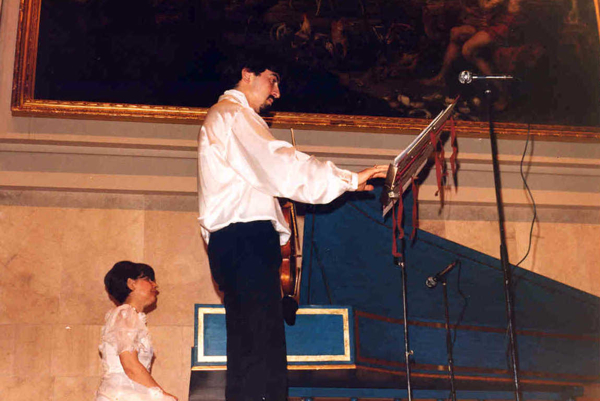
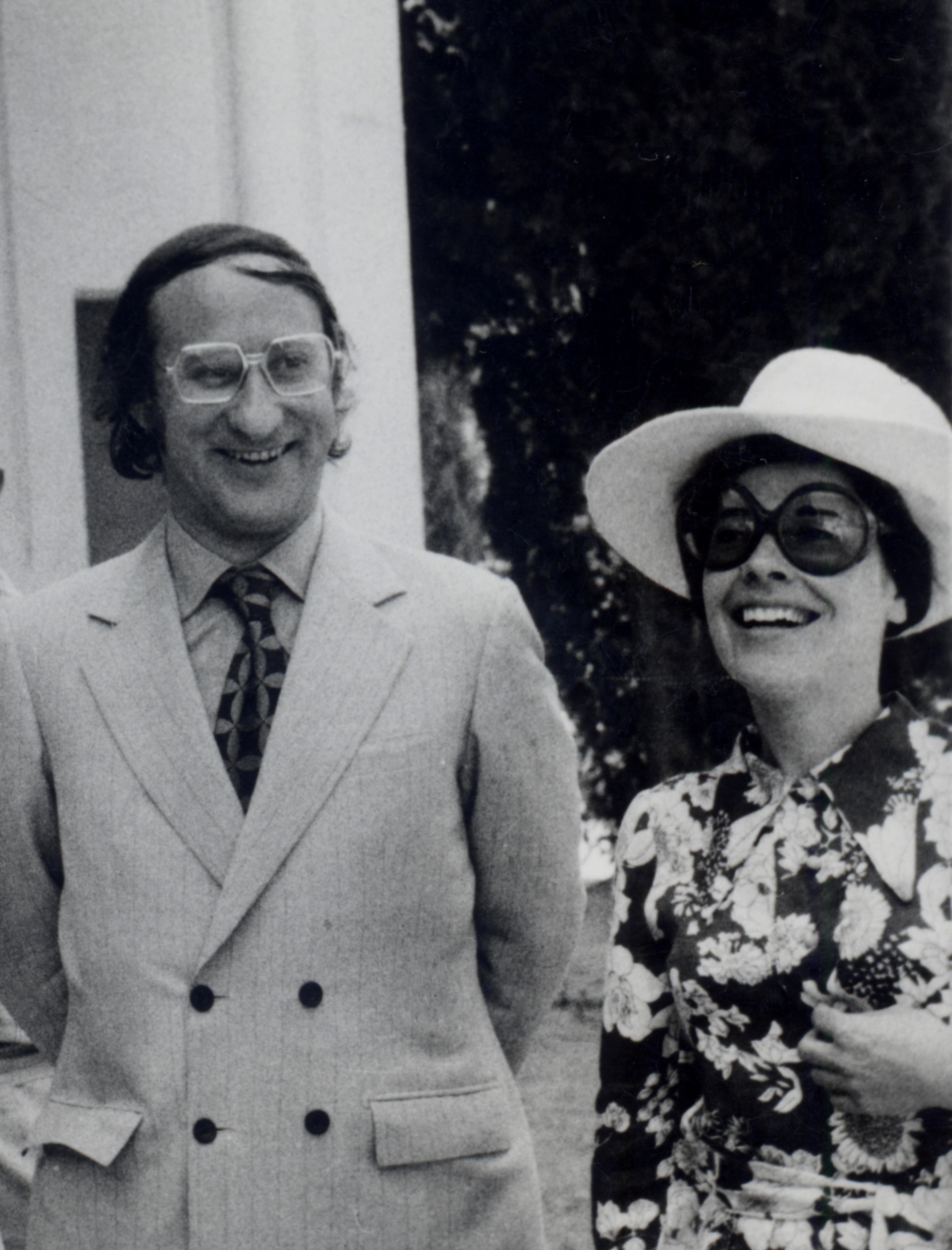
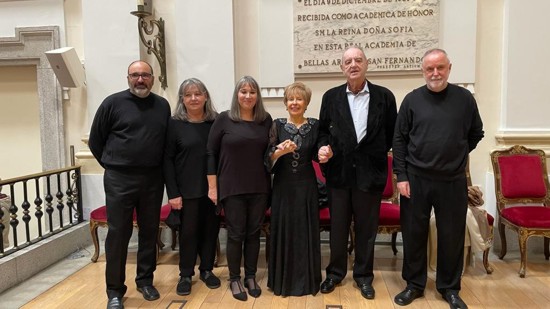
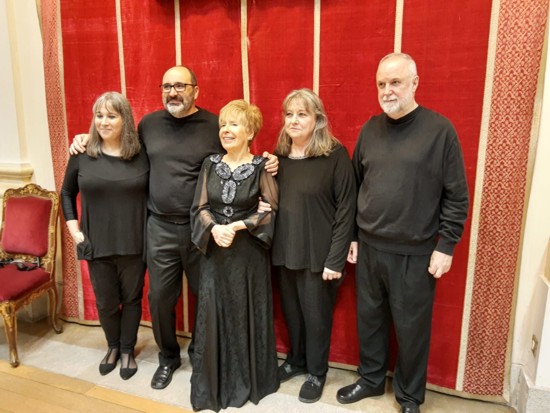
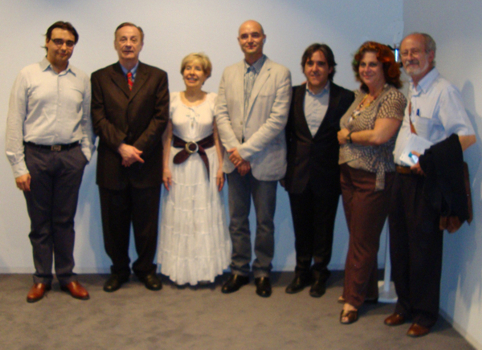
| While in Uruguay she began her piano studies at the age of 5 in Florida, where she
was born, with Prof. Olga Dibarboure. She later continued further studies in Montevideo with the
well known pianist Hugo Balzo. Her in-depth studies of the Baroque lead to her complete dedication to
the harpsichord. It was at the National Conservatory Carlos López Buchardo in Buenos Aires where
she completed her studies of this instrument under the direction of Professor Norma Romano, and
graduated with top honors. |
| María Teresa Chenlo came to Europe under scholarship in order to perfect her harpsichord
studies with Genoveva Galvez in Spain and in Paris with the renowned Rafael Puyana.
|
| After permanently settling in Spain she acquired Spanish citizenship and engaged in an
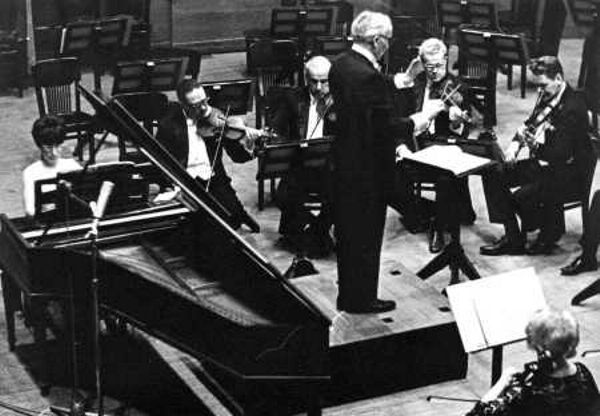
intense program of concerts throughout Europe and the Americas. Her collaborations with prestigious
conductors are numerous and include Howard Mitchell, Stanislav Wislocki, Hector Tosar, Arturo Tamayo,
Pierre Colombo, Antal Dorati, Kiril Kondrashin, José Luis Temes, Antonio Ros Marba, Miguel Patron
Marchand, Jordi Bernàcer; and she has worked with recognized performing artists such as Enrico Gatti,
John Halloway, Sharon Gould, Christian Baude, Paul Esswood and Claire Powel among others. |
| As a renowned soloist, Chenlo has performed in international music festivals such as
Prague Spring, the Festivals of Navarra, Autumn Festival of Paris, the Contemporary Music Festivals of
Alicante, 20th Century Music of Bilbao, International Festival of Segovia, Festival Bach, Wigmore Hall
of London, Muzickcentrum Ijsbreker of Amsterdam, Clermont-Ferrand Festival, Festival de Música Española
de Cádiz, XX Encuentros Manuel de Falla de Granada and others. She has often collaborated with the
Spanish Chamber Orchestra directed by Víctor Martín, with the group LIM of Jesús Villa Rojo, and was a
founding member of the Madrid Camerata conducted by Luis Remartínez. |
| Her career is marked by numerous awards and recognitions such as the Jacques Antoine Prize
of the Monte Carlo Festival, three-time winner of the Premio Nacional del Disco in Spain, and honorable
distinction at the TRIMALACA 2000 of UNESCO. |
| Her extensive musical focus is a formidable exercise in stylistic variety which is evident
in her concerts and recordings that encompass the great music of the Baroque, works for fortepiano from
the 18th and 19th centuries, harpsichord repertoire of the Americas, as well as contemporary works,
among which she has premiered over 60 new works and many of them were dedicated to her. |
| She has recorded for ETNOS, TIC-TAC, DIAL DISCOS, VIENNA MODERN MASTERS, URTEXT, VERSO,
FACTORIA AUTOR, NAVONA RECORDS, CENTRO DE DOCUMENTACIÓN MUSICAL DE ANDALUCÍA, NÎBIUS, RADIO NACIONAL and
TELEVISIÓN ESPAÑOLA, TELEVISIÓN de EE.UU. and the BBC in London. |
| Chenlo has also been engaged in important studies involving the transcription and research
of various 18th and 19th century keyboard works, and has taught courses in the aesthetics and
interpretation of music from these periods at festivals and conservatories in Spain and the Americas.
|
| As an example of what critics have written about her interpretative playing, the reviewer of the Czech
newspaper Lidova Demokracie wrote the following about her performance at the Spring Festival of
Prague: “María Teresa Chenlo is an artist who is a skillful interpreter. Her recital was an
exposition of virtuoso technique and rhythmical precision along with a beautiful phrasing and musical
elegance…It was a concert of total, genuine emotion.” |
|